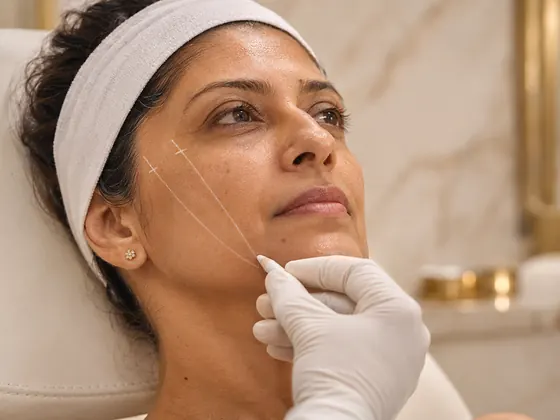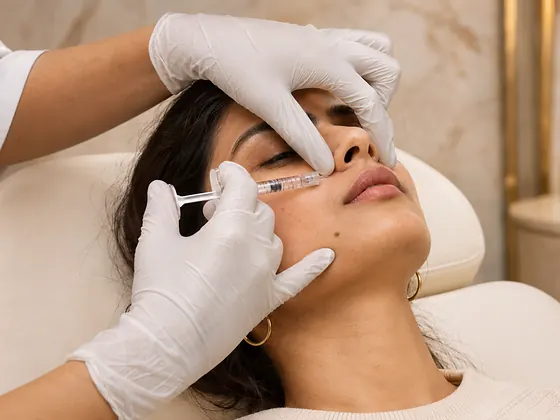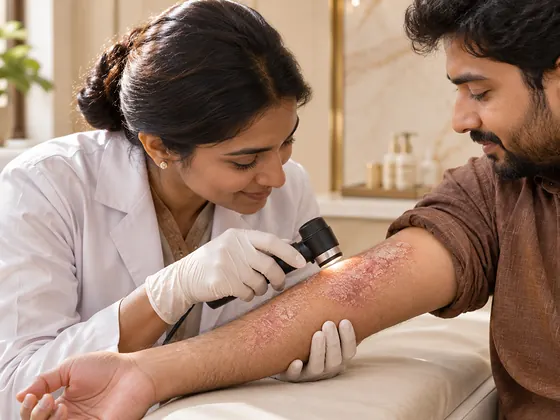
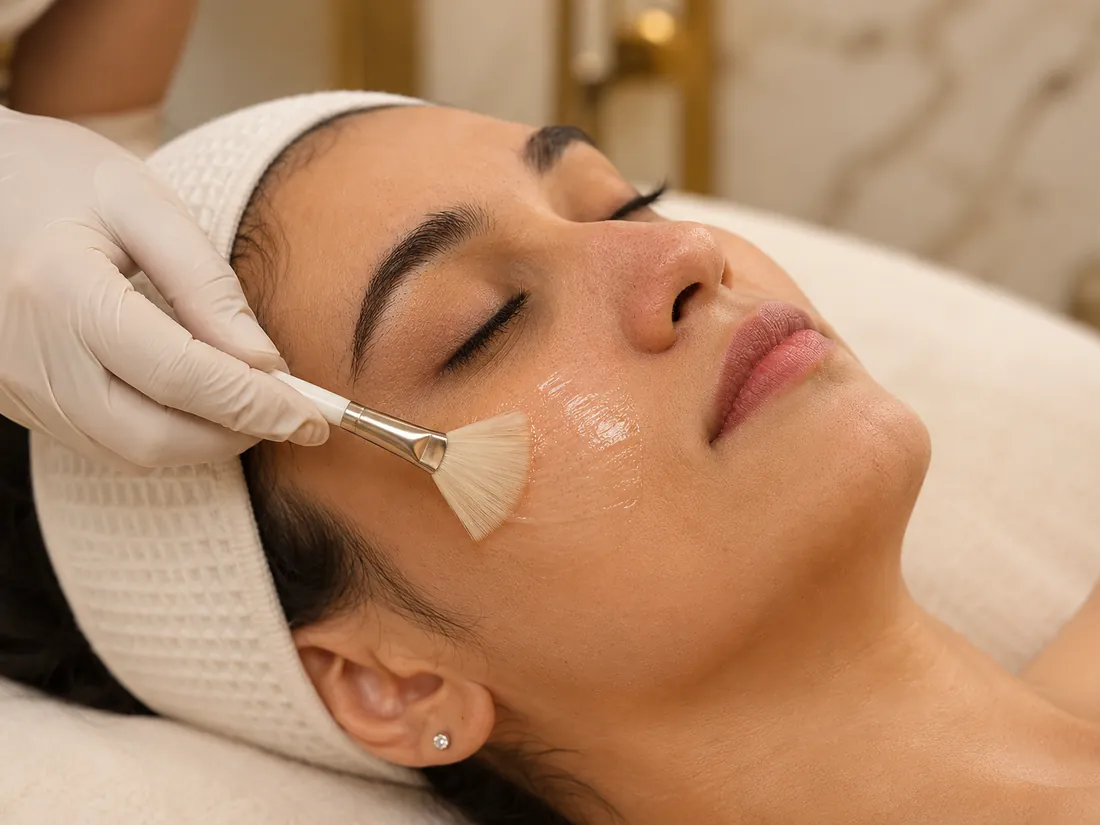
Melasma causes brown or grey-brown patches, most often on the cheeks, forehead, nose and upper lip. Treatment helps people who want to lighten these patches and keep them under control.
How it works
Melasma happens when pigment cells become overactive, often set off by sun, heat, hormones and family history. Treatment usually combines daily sun protection with prescription creams, and sometimes gentle peels or other in-clinic procedures. Melasma can be controlled but often returns, so ongoing care is part of the plan.
What it can help
- Brown facial patches
- Pigmentation after pregnancy
- Sun-triggered dark patches
- Uneven skin tone
Your visit, step by step
- Consultation with the doctor
The doctor examines the patches, asks about sun exposure, pregnancy, hormonal pills and creams you have used, and confirms the diagnosis.
- Your treatment plan
You get a plan that usually includes sunscreen and prescription creams, with clear instructions on how and how long to use them.
- In-clinic procedures if suitable
If your skin needs more help, the doctor may add gentle peels or other procedures at later visits.
- Regular reviews
The doctor checks your progress and adjusts the plan to keep the patches under control.
Aftercare
- Use a broad-spectrum sunscreen daily and reapply outdoors
- Wear a hat or stay in shade in strong sun
- Use prescription creams only as directed
- Avoid bleaching creams, scrubs and home remedies
Is it right for you?
Tell your doctor first if you are pregnant, breastfeeding, on hormonal pills, or have a history of blood clots, as this changes which treatments are safe for you.
Questions about Melasma
Can melasma be cured?
Melasma can often be lightened and controlled, but it tends to come back with sun or hormonal changes. Long-term sun protection matters as much as treatment.
Are steroid creams safe for melasma?
Creams with strong steroids should only be used under a doctor's direction and for a limited time. Unsupervised use can thin the skin and make things worse.
Will a laser remove melasma?
Lasers are not the first choice for melasma and can sometimes make it darker in Indian skin. Your doctor will only suggest one if it suits your case.
Are tablets used for melasma?
Some doctors prescribe tranexamic acid tablets for melasma, which is an off-label use with limited long-term evidence. Your doctor will check your health history, including any clotting risk, before advising it.