Dermaplaning is a cosmetic treatment that gently scrapes the skin's surface with a sterile blade. It suits people with dull, dry or flaky skin and fine facial hair who want smoother skin and easier makeup application.
How it works
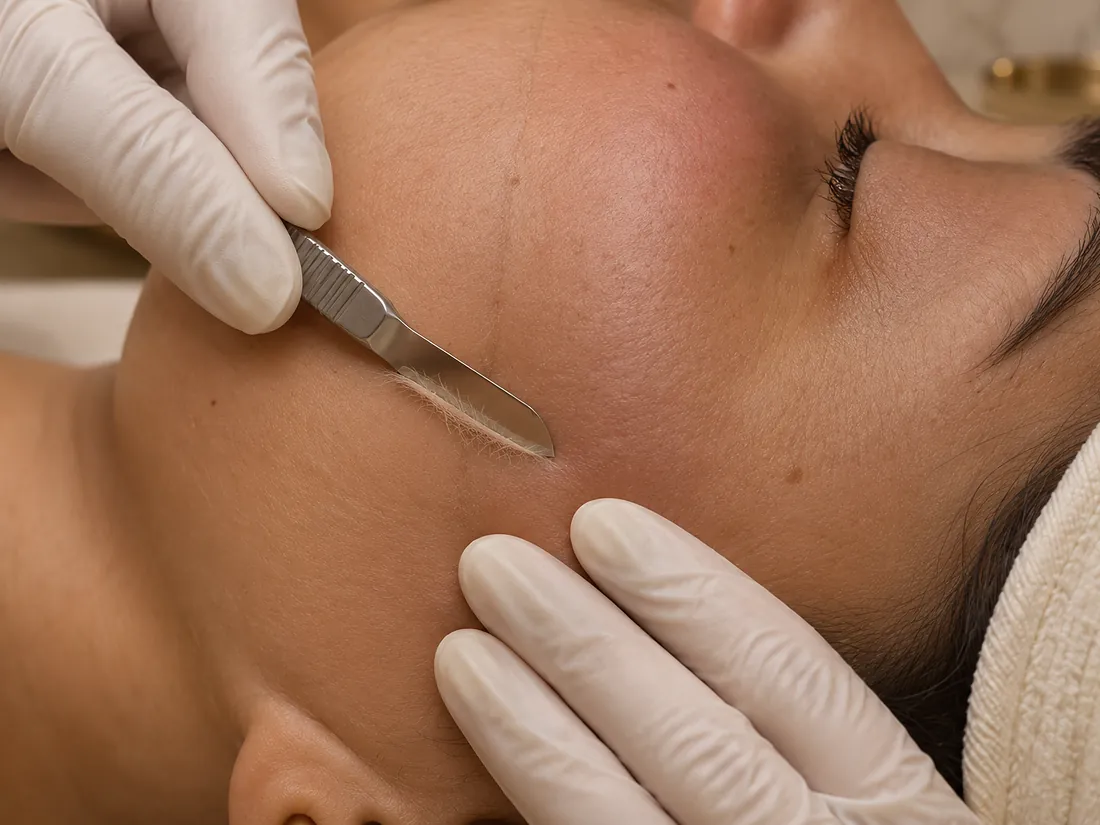
A sterile surgical blade is drawn across the skin at a careful angle to lift off dead surface cells and soft, fine hair. This leaves the skin feeling smoother and helps skincare products spread evenly. It works on the surface only, so the effect is short-lived, and research on it is limited.
What it can help
- Dull, flaky skin
- Fine facial hair
- Patchy makeup application
- Rough skin texture
Your visit, step by step
- Consultation with the doctor
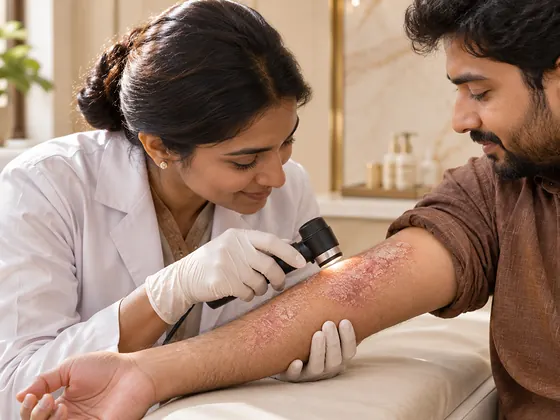
The doctor checks your skin type, any acne and other skin conditions to make sure dermaplaning is right for you.
- Cleansing
Your face is cleansed and dried so the blade glides evenly.
- Dermaplaning
Short, light strokes are made across the face. It does not hurt and most people find it relaxing.
- Soothing and sun protection
A gentle moisturiser and sunscreen are applied, and you get aftercare advice.
Aftercare
- Use sunscreen daily, as fresh skin burns more easily
- Skip scrubs, peels and retinoid creams for a few days
- Avoid makeup for the rest of the day if you can
- Keep your hands off your face and use a clean pillow cover
Is it right for you?
It is not for you if you have active acne, cold sores, or eczema or rosacea flares on the face, and you should tell the doctor if you have taken isotretinoin tablets in the past few months.
Questions about Dermaplaning
Will my facial hair grow back thicker?
No. Dermaplaning cuts soft hair at the surface and does not change the root, so it grows back the same as before.
Is it the same as shaving?
Both use a blade, but dermaplaning uses a sterile surgical blade and a set technique to remove dead skin as well as hair.
How long does the smoothness last?
Usually a few weeks, as dead skin and fine hair return with the normal skin cycle.
Can I have it if I have acne?
Not during active breakouts, as the blade can irritate spots and spread bacteria. The doctor may suggest treating the acne first.