Rosacea is a long-term condition that causes redness, flushing, small visible blood vessels and acne-like bumps, mostly on the cheeks, nose and forehead. Treatment helps adults who flush easily or have sensitive, red skin that reacts to heat, sun or spicy food.
How it works
Rosacea cannot be cured, but it can be controlled. The doctor may prescribe gentle medicated creams, short courses of tablets for bumps and a simple skincare and sunscreen routine, and helps you spot your triggers. Sticking to the plan reduces flares over time.
What it can help
- Facial redness and flushing
- Red bumps and pimples
- Visible small blood vessels
- Burning, sensitive skin
- Red, gritty eyes
Your visit, step by step
- Consultation with the doctor
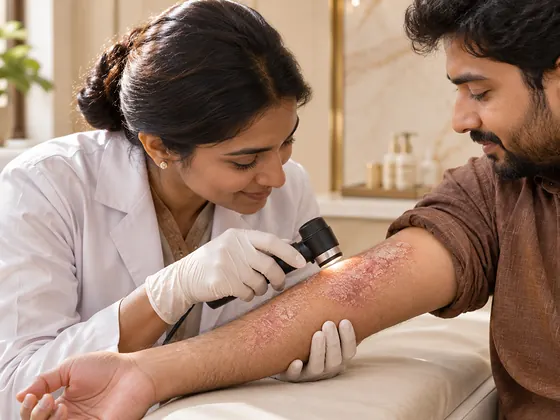
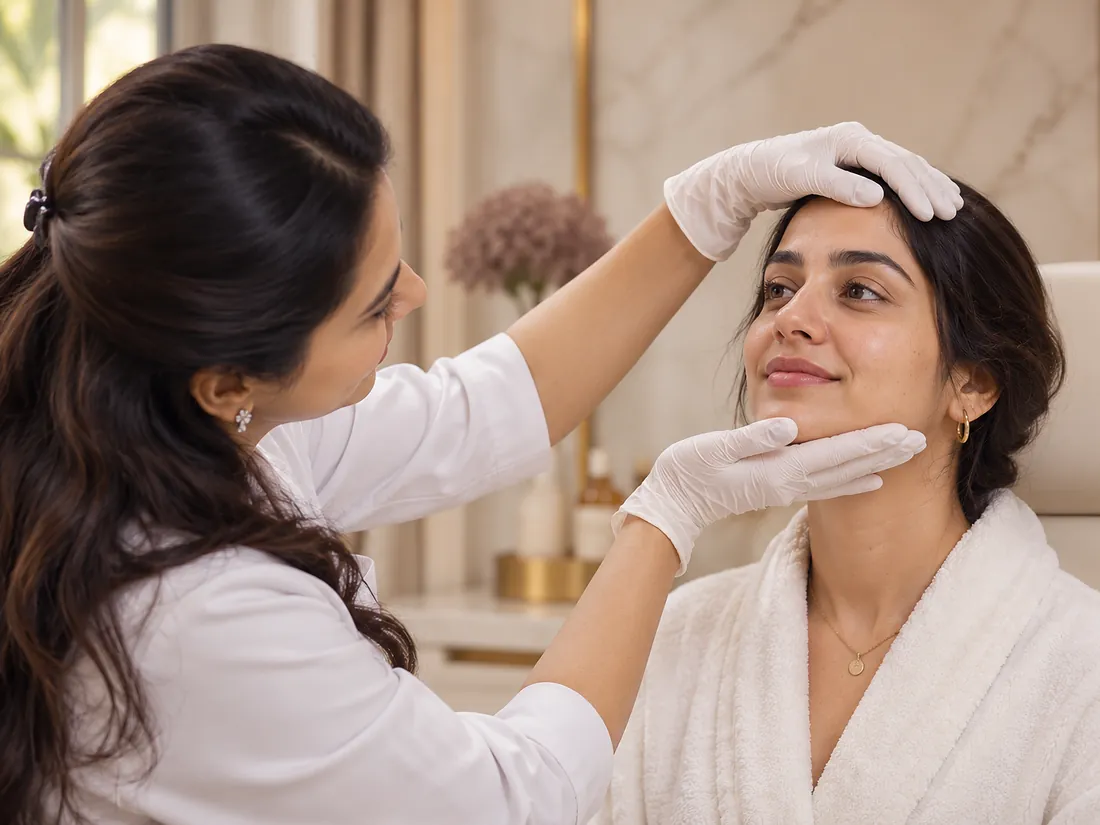
The doctor examines your skin, rules out conditions that look similar and asks about triggers and the creams you have used.
- Triggers and skincare
You learn which habits and products may be worsening redness and get a simple routine.
- Medical treatment
The doctor prescribes creams or tablets suited to your type of rosacea.
- Follow-up
A review in a few weeks checks how your skin is responding and adjusts the plan.
Aftercare
- Use a broad-spectrum sunscreen every day
- Choose gentle, fragrance-free cleansers and moisturisers
- Note triggers like heat, sun, alcohol, hot drinks or spicy food
- Avoid steroid creams on your face unless the doctor prescribes them
Is it right for you?
Tell the doctor if you are pregnant or breastfeeding, have eye symptoms, or have been using steroid or fairness creams on your face, as this changes the treatment.
Questions about Rosacea
Is rosacea the same as acne?
No. Rosacea can cause bumps that look like acne, but it has no blackheads and comes with redness and flushing. The treatment is different too.
Can rosacea be cured?
There is no cure, but most people can keep it well controlled. It tends to come and go, so a long-term plan helps.
Why did my redness get worse after using a fairness cream?
Some fairness creams contain steroids, and steroids used on the face for a long time can trigger or worsen rosacea-like redness. Stop them with a doctor's guidance, as the skin can flare at first.
Do I need to stop eating spicy food?
Not always. Triggers differ from person to person, so the doctor helps you find yours rather than banning foods.