Eczema, also called dermatitis, makes skin dry, itchy and red, and sometimes cracked or oozing. Treatment helps teens and adults with flares, long-term itching or eczema set off by soaps, metals or other things that touch the skin.
How it works
Skin with eczema has a weak barrier, so it loses moisture and reacts to irritants easily. The doctor rebuilds the barrier with moisturisers, calms inflammation with prescription creams and may add anti-itch tablets or other medicines for stubborn cases. Finding and avoiding triggers is a big part of keeping it under control.
What it can help
- Dry, itchy patches
- Red, cracked skin
- Hand eczema
- Night-time itching
- Frequent flares
Your visit, step by step
- Consultation with the doctor
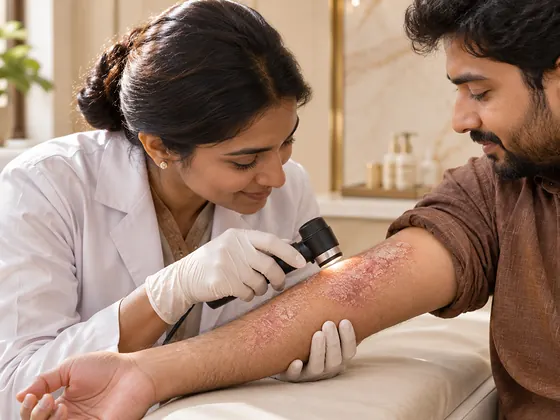
The doctor examines your skin, asks about allergies, family history, soaps and work exposures, and confirms the type of eczema.
- Finding triggers
If a contact allergy is suspected, the doctor may advise a patch test to find the cause.
- Treatment plan
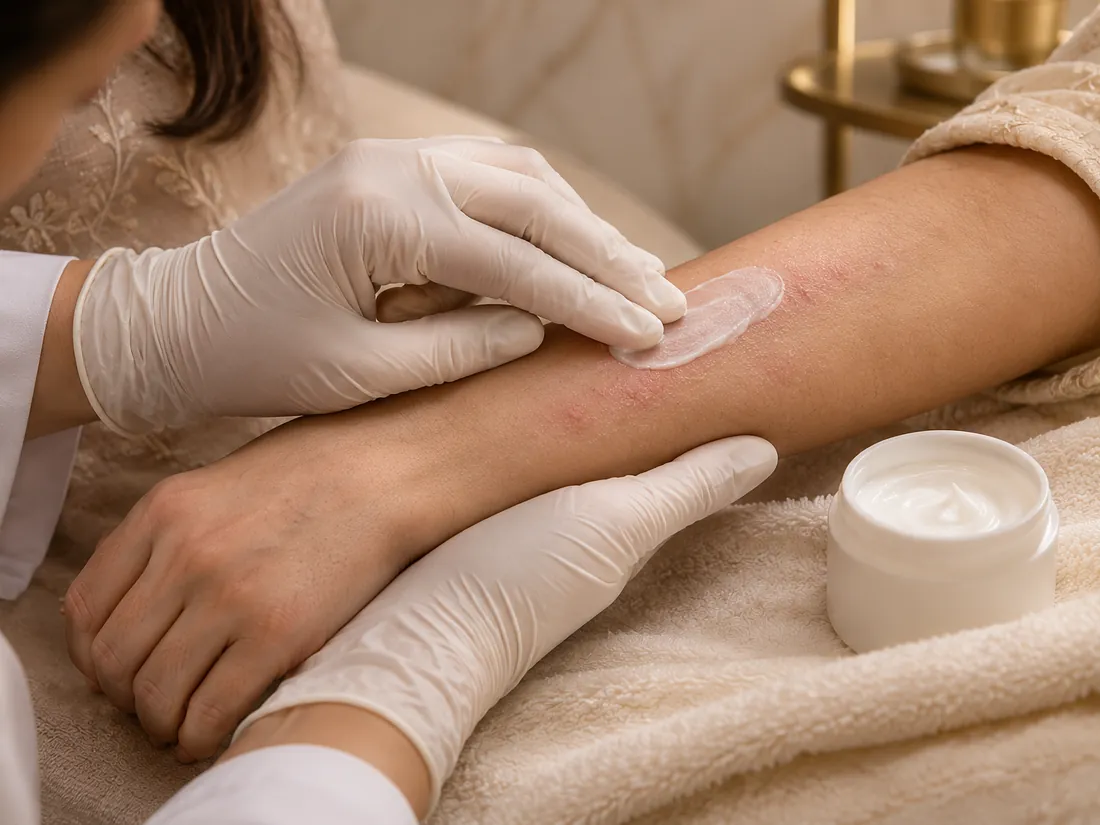
You get prescription creams, a moisturiser routine and tablets if needed, with clear steps for flares.
- Follow-up
The doctor reviews your skin and reduces strong medicines as it settles.
Aftercare
- Moisturise at least twice a day and right after bathing
- Use mild soap-free cleansers and lukewarm water
- Wear soft cotton clothes and keep nails short
- Wear gloves for washing and cleaning if your hands are affected
Is it right for you?
Tell the doctor if you are pregnant or breastfeeding, if the skin is oozing, crusted or painful, or if you have used strong steroid creams for a long time.
Questions about Eczema
Is eczema contagious?
No. You cannot catch eczema from someone else. Eczema can get infected, though, so tell the doctor about crusting or pus.
Are steroid creams safe?
In the right strength and for the right length of time, they are safe and very useful. Problems come from long use without supervision, so follow the doctor's plan.
Will eczema go away?
Eczema often comes and goes. Good daily skincare and early treatment of flares can keep it under control for long periods.
What can I do about itching at night?
Moisturise before bed, keep the room cool and keep nails short. The doctor may also prescribe an anti-itch medicine.