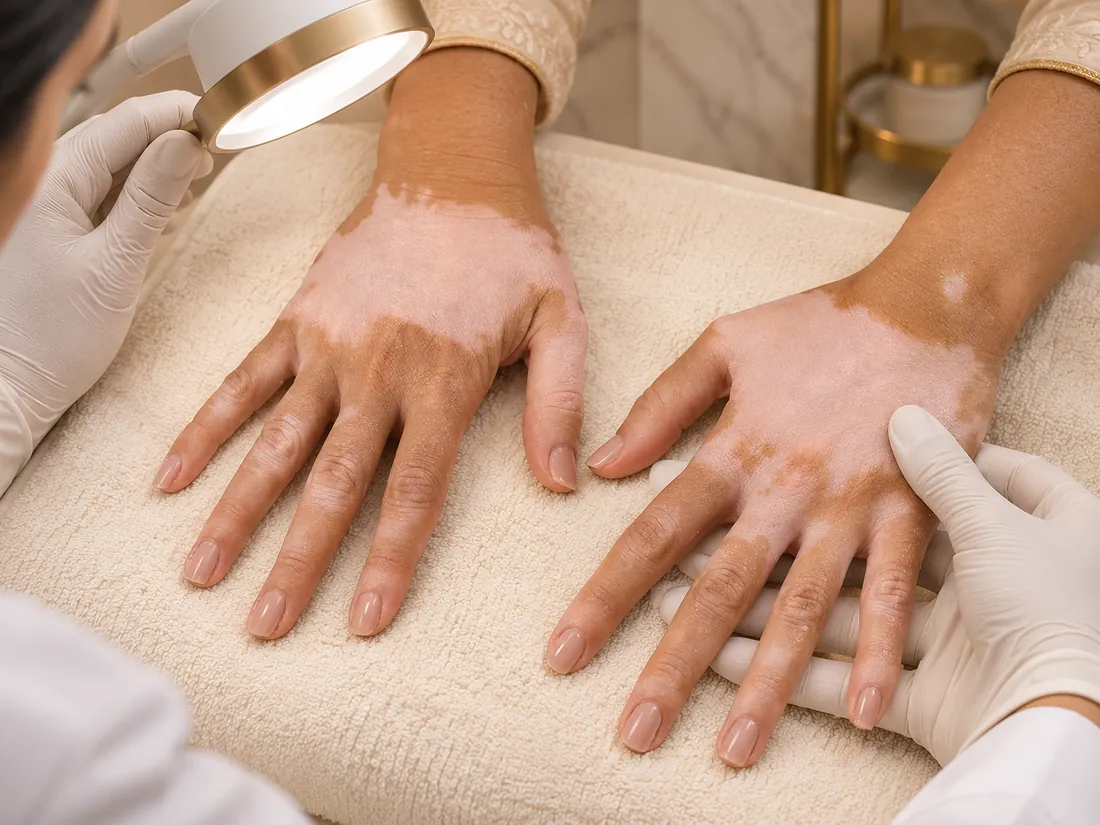
Vitiligo is a condition where the immune system affects the cells that give skin its colour, leaving white patches. Treatment helps people aged 14 and above slow its spread and encourage colour to return.
How it works
Treatment aims to calm the immune reaction and help pigment cells make colour again. The doctor may use creams, light therapy and sometimes tablets, and for patches that have stayed stable for a long time, minor grafting procedures can be discussed. There is no cure, response is slow and varies by body area, and colour may return only in part or patches may come back.
What it can help
- White patches on skin
- Spreading patches
- Patches on face or hands
- White hair in patches
Your visit, step by step
- Consultation with the doctor
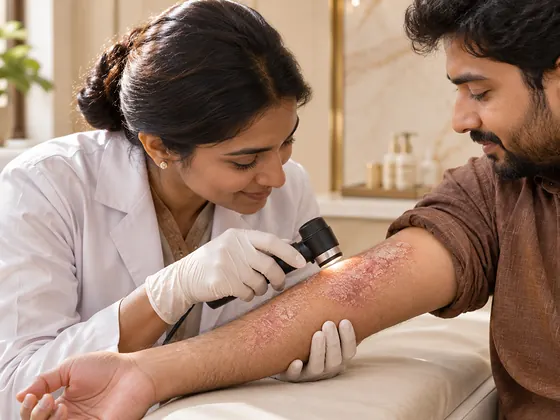
The doctor examines the patches, asks when they started and whether they are spreading, and checks your health history.
- Tests if needed
Blood tests may be advised to look for linked conditions such as thyroid disease.
- Treatment plan
You get a plan with creams, sun care and, if suitable, light therapy or tablets, with clear instructions.
- Regular review
The doctor tracks progress with photos over months and adjusts the plan.
Aftercare
- Use sunscreen on white patches, as they burn easily
- Use creams only as prescribed and for the advised time
- Avoid cuts, rubbing and tight clothing over patches
- Keep your review visits so progress can be tracked
Is it right for you?
Tell the doctor if you are pregnant or breastfeeding, have thyroid or other autoimmune conditions, or have had skin cancer, as this affects which treatments are safe.
Questions about Vitiligo
Is vitiligo contagious?
No. Vitiligo does not spread from person to person through touch, food or sharing things. It is linked to the immune system.
Can vitiligo be cured?
There is no cure at present. Treatment can slow the spread and bring back colour in many patches, but results vary and patches can return.
Do some areas respond better than others?
The face and neck often respond better. Hands, feet, lips and skin over joints tend to respond more slowly.
Do milk or fish cause vitiligo?
There is no proof that common foods cause or worsen vitiligo. A normal balanced diet is fine unless the doctor advises otherwise.