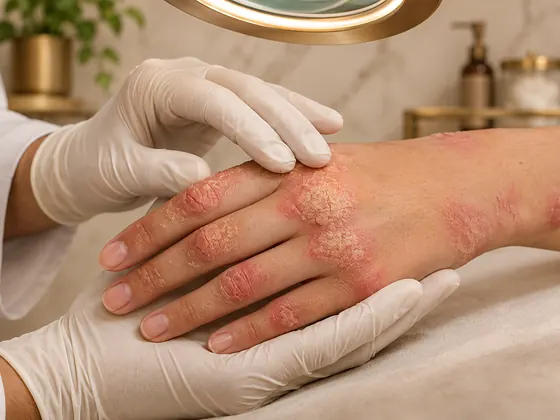
Psoriasis is a long-term condition where the immune system speeds up skin growth, causing thick, scaly, itchy patches. Treatment helps teens and adults bring flares under control and keep the skin clearer for longer.
How it works
Psoriasis has no cure yet, but it can be controlled. Depending on how much skin is affected, the doctor may use medicated creams and scalp lotions, light therapy or tablets that calm the overactive immune response. The plan changes over time as your skin responds.
What it can help
- Scaly red patches
- Itchy scalp flakes
- Thick elbow and knee plaques
- Nail pitting
- Frequent flares
Your visit, step by step
- Consultation with the doctor
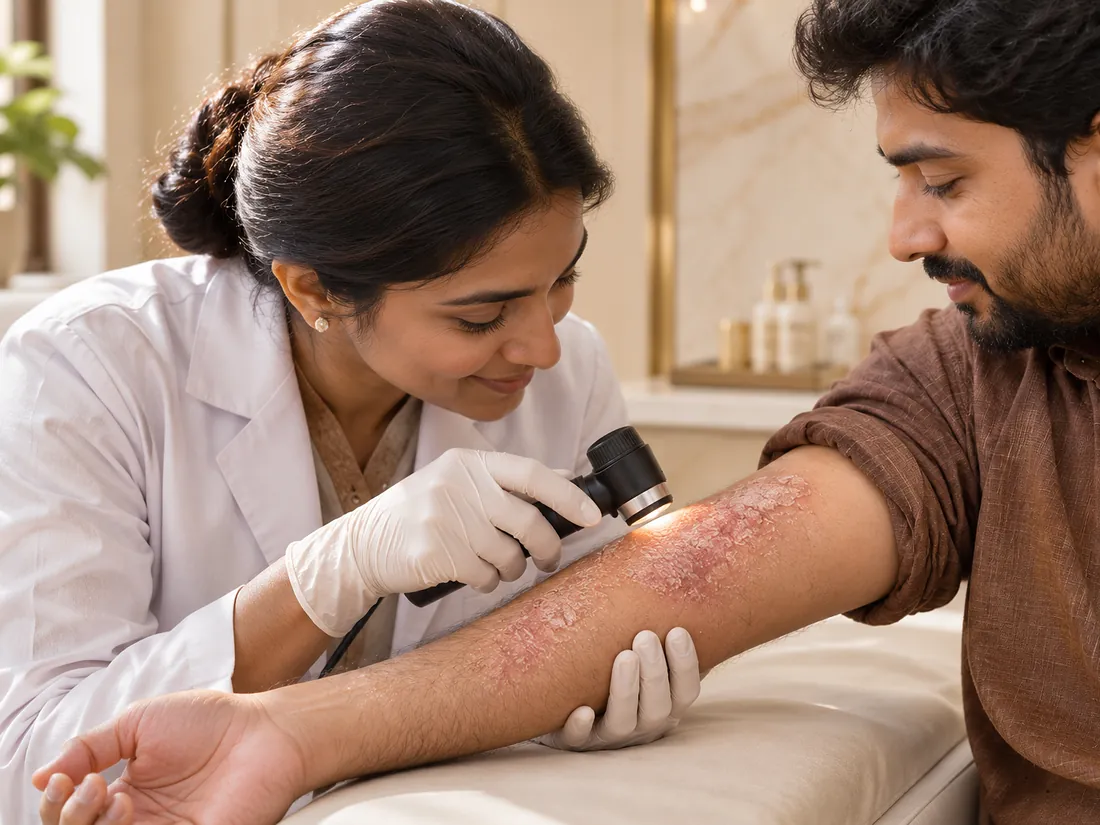
The doctor examines your skin, scalp and nails, asks about joint pain, triggers and past treatments, and confirms the diagnosis.
- Tests if needed
Blood tests may be advised before some tablets, to check that they are safe for you.
- Treatment plan
You get a written plan with creams and scalp care, plus tablets or light therapy if needed, and clear instructions for each.
- Follow-up
Regular visits let the doctor check progress, watch for side effects and step treatment up or down.
Aftercare
- Use your creams exactly as prescribed
- Moisturise thick patches daily, especially after a bath
- Avoid scratching or picking at scales
- Note triggers like stress, smoking, alcohol or infections
Is it right for you?
Tell the doctor if you are pregnant, planning a pregnancy, breastfeeding, have liver or kidney disease or have joint pain, as this changes which medicines are safe for you.
Questions about Psoriasis
Is psoriasis contagious?
No. You cannot catch psoriasis from touching someone or sharing things. It comes from the immune system, not an infection.
Can psoriasis be cured?
There is no cure yet, but most people can keep it well controlled with the right treatment. Flares may come back, and the plan is adjusted when they do.
Can I use strong steroid creams from the chemist?
Using strong steroid creams without guidance can thin the skin and cause a bad flare when you stop. The doctor will choose the right strength and length of use for each area.
Why does the doctor ask about joint pain?
Some people with psoriasis also get psoriatic arthritis, which causes stiff or swollen joints. Spotting it early helps protect the joints.