
Dermatitis means inflamed skin that is red, itchy, dry or flaky, and it includes eczema, contact dermatitis and seborrhoeic dermatitis. Seeing a doctor helps you find the type and its triggers, and get treatment that calms flares.
How it works
Your doctor first works out which type of dermatitis you have and what may be setting it off, such as soaps, metals, cosmetics, sweat or stress. Treatment usually combines gentle skincare and moisturisers with prescription creams or medicines to calm the inflammation. Dermatitis often comes and goes, so the plan also covers how to prevent and handle flares.
What it can help
- Itchy skin
- Red, flaky patches
- Rashes from products
- Dandruff-like scaling
- Dry, cracked skin
Your visit, step by step
- Consultation with the doctor
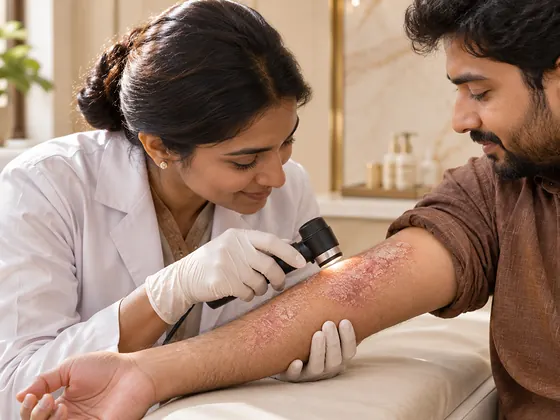
The doctor examines your skin, asks about your routine, work, products and family history, and confirms the type of dermatitis.
- Finding triggers
You talk through possible triggers, and if an allergy is suspected the doctor may advise patch testing.
- Treatment plan
You get prescription treatment for the flare and a gentle daily routine to protect your skin.
- Follow-up
The doctor checks how your skin has responded and adjusts or tapers your medicines.
Aftercare
- Moisturise soon after bathing, every day
- Use mild, fragrance-free soap and lukewarm water
- Avoid known triggers such as certain metals or cosmetics
- Use steroid creams only for as long as advised
Is it right for you?
See a doctor quickly if the rash spreads fast, blisters, oozes, becomes painful or comes with fever, and tell your doctor if you are pregnant or already use any steroid or over-the-counter creams.
Questions about Dermatitis
Is dermatitis contagious?
No. Dermatitis does not pass from person to person, though scratched skin can sometimes get infected.
Can I use a steroid cream from the chemist?
Steroid creams used without guidance can thin the skin and cause other problems. Use them only as your doctor prescribes.
Can dermatitis be cured?
Some types settle fully once the trigger is avoided. Others, like eczema, can return, but good care can keep flares mild and less frequent.
Do I need allergy tests?
Not always. If your doctor suspects a contact allergy, patch testing may help find the cause.