Skin tags are small, soft, harmless growths that hang from the skin, often on the neck, underarms, eyelids or groin. Removal suits you if they catch on jewellery or clothing, get irritated, or simply bother you.
How it works
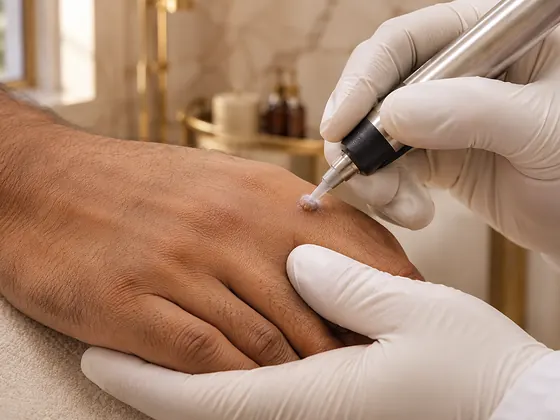
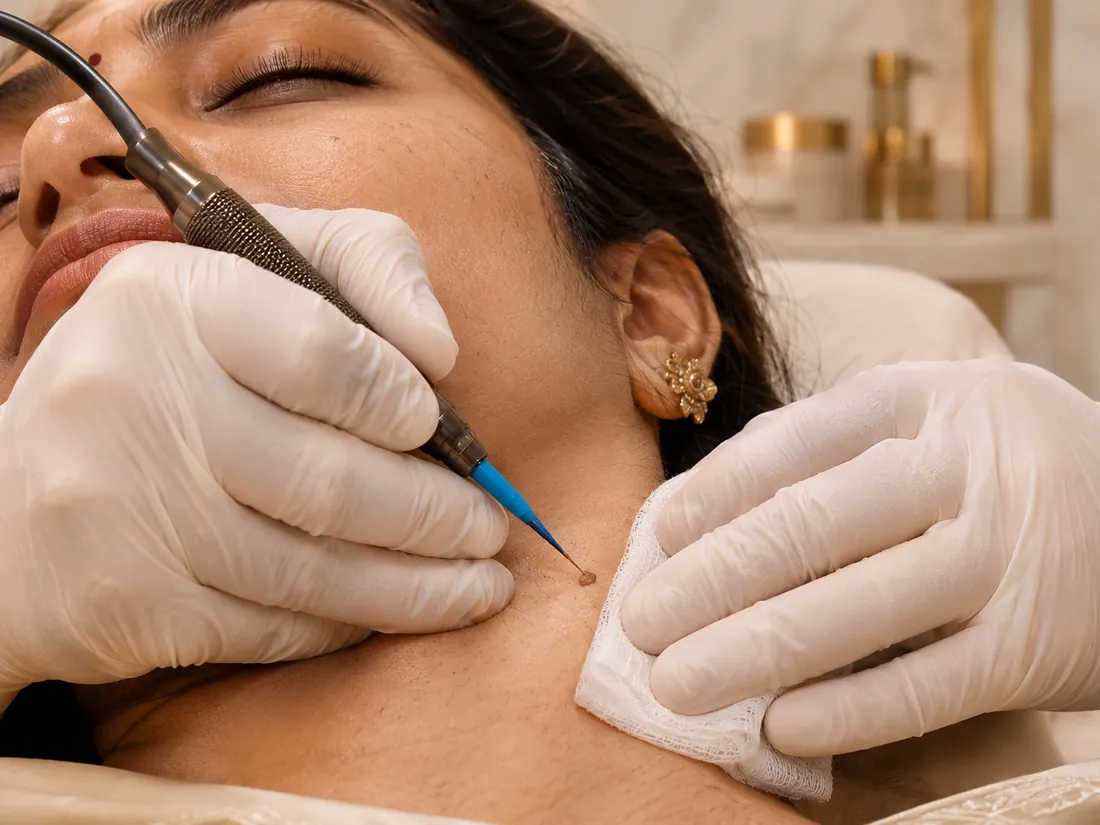
After cleaning and, where needed, numbing the area with local anaesthesia, the doctor removes each tag by snipping it at the base, using radiofrequency cautery, or freezing it. The small wounds heal over one to two weeks. Removed tissue may be sent for testing if a growth looks unusual.
What it can help
- Neck skin tags
- Underarm skin tags
- Tags that catch or bleed
- Eyelid skin tags
Your visit, step by step
- Consultation with the doctor
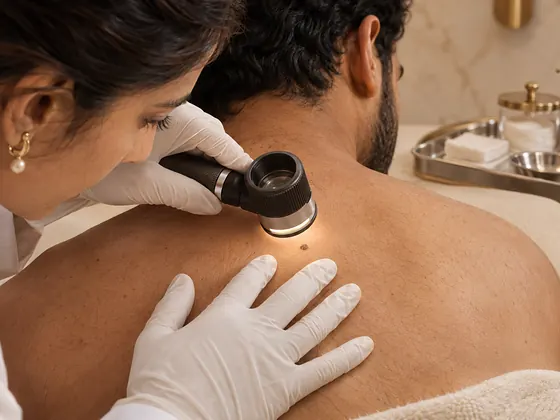
The doctor checks the growths to confirm they are skin tags and not warts, moles or something that needs testing, and confirms removal suits you.
- Numbing
Numbing cream or a small local anaesthetic injection is used.
- Removal
Each tag is removed and the spots are dressed.
- Aftercare
You get wound care advice and a review visit if needed.
Aftercare
- Keep the spots clean and dry for 24 hours
- Apply the prescribed ointment
- Avoid rubbing from tight collars or jewellery
- Do not pick the scabs
Is it right for you?
Tell the doctor first if you take blood thinners, or have diabetes, a bleeding disorder or a history of keloids.
Questions about Skin Tag Removal
Are skin tags dangerous?
Skin tags are harmless. They are more common with weight gain, diabetes, pregnancy and in skin folds.
Will they come back?
A removed tag does not usually grow back, but new ones can appear elsewhere over time. Results vary from person to person.
Can I cut them off at home?
Please do not. Home removal can cause bleeding, infection and scarring, and you might miss a growth that needs checking.
Can eyelid tags be removed?
Often yes, with extra care near the eye. The doctor will assess whether it is safe to do at the clinic.