Mole removal is a minor procedure to take off a mole for cosmetic reasons or because it rubs, catches or bothers you. A doctor checks the mole first, because any mole that looks unusual needs proper assessment before removal.
How it works
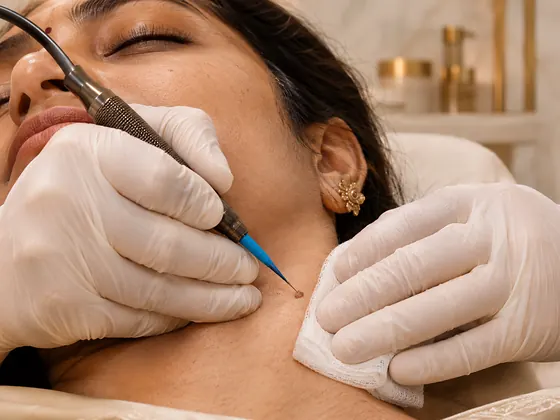
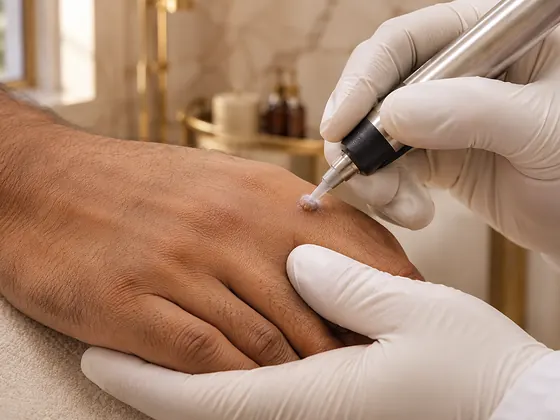
After numbing the area with local anaesthesia, the doctor removes the mole by shaving it off, cutting it out and closing with a few stitches, or using radiofrequency for some small cosmetic moles. The method depends on the mole's size, depth and appearance. Removed tissue may be sent to a lab for testing when the doctor thinks it is needed.
What it can help
- Raised or bothersome moles
- Moles catching on clothing
- Cosmetic facial moles
- Moles that need testing
Your visit, step by step
- Consultation and mole check
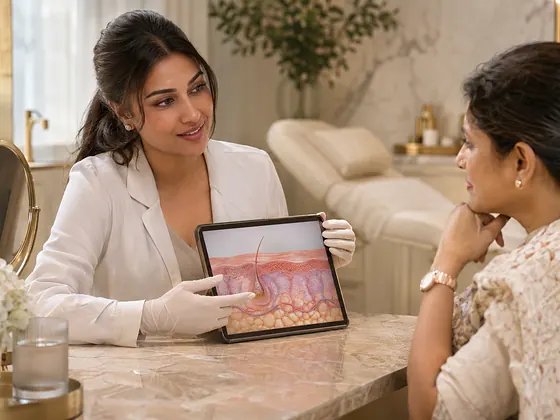
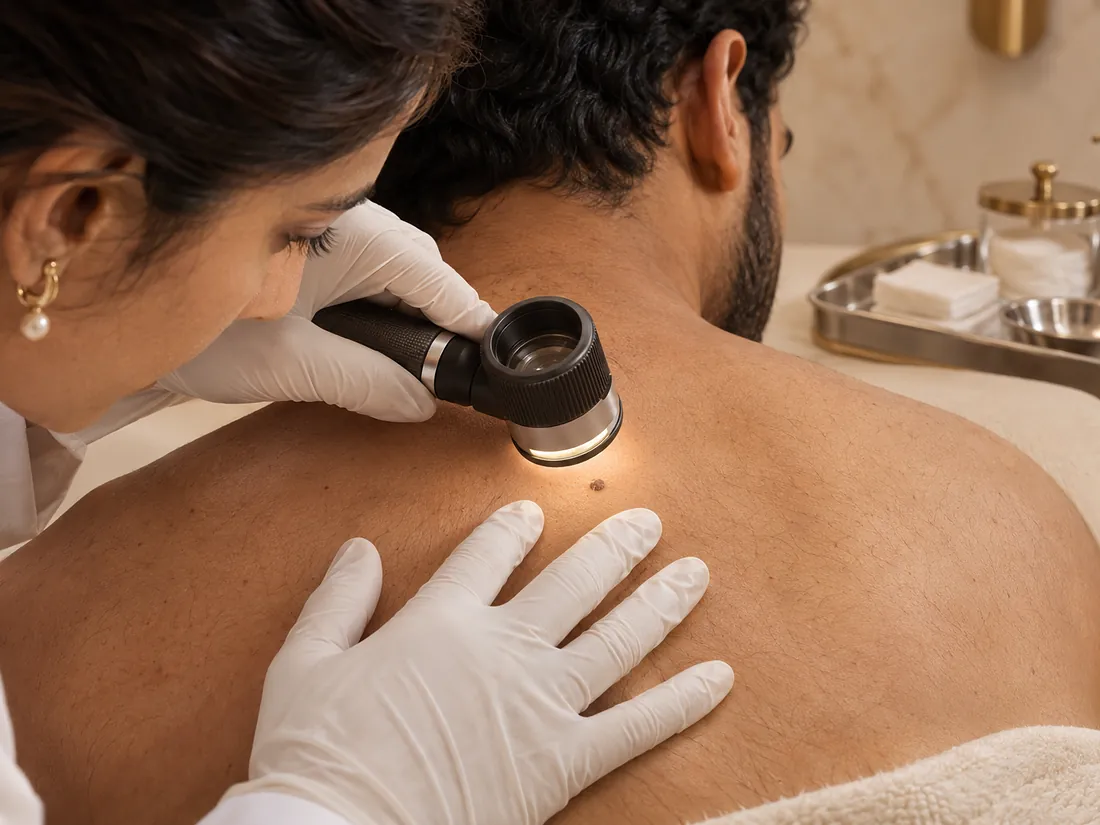
The doctor examines the mole, asks about any change in size, colour or shape, and decides whether it suits removal at the clinic or needs a specialist referral.
- Local anaesthesia
The area is cleaned and numbed with a small injection.
- Removal
The mole is removed by the chosen method and the wound is dressed, with stitches if needed.
- Results and follow-up
If tissue was sent for testing, the doctor explains the report. Any stitches come out in about 7 to 14 days.
Aftercare
- Keep the dressing clean and dry for 24 to 48 hours
- Apply the ointment the doctor prescribes
- Do not pick the scab
- Use sunscreen on the healed mark
Is it right for you?
Tell your doctor first if you take blood thinners, have a bleeding disorder or a history of keloids, or if the mole has recently changed, bled or itched.
Questions about Mole Removal
Will it leave a scar?
Any removal leaves some mark. It is usually small and fades over months, but it can stay raised or darker, especially if you form keloids. Results vary.
Can the mole come back?
A mole that has been fully cut out does not usually return. After a shave removal, some pigment can reappear and may need another treatment.
Which moles should be checked first?
See a doctor about any mole that is changing, has an irregular edge or uneven colour, bleeds, itches or looks different from your other moles.
Does it hurt?
You feel the small numbing injection. After that, the removal should not be painful.