A hemangioma is a growth made of extra blood vessels that shows up as a red, purple or bluish mark or bump. Adults often get small red spots called cherry angiomas, which can be treated if they bother you or bleed.
How it works
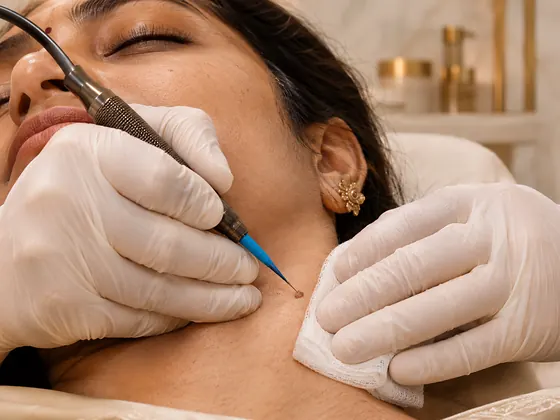
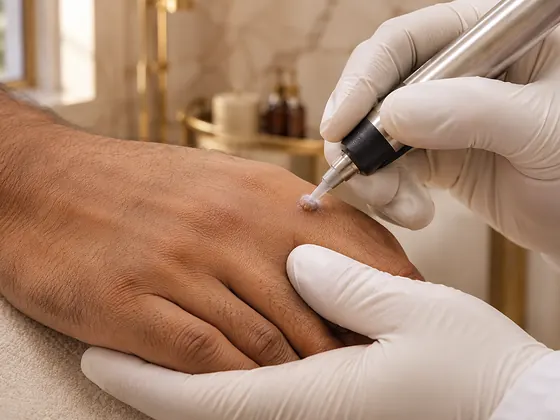
Small hemangiomas and cherry angiomas can be treated with laser or radiofrequency cautery, which seals and shrinks the blood vessels. Larger or deeper ones may need medicines, removal under local anaesthesia, or a specialist referral. Removed tissue may be sent for testing when the doctor thinks it is needed.
What it can help
- Cherry red spots
- Small red bumps
- Spots that bleed easily
- Cosmetic red marks
Your visit, step by step
- Consultation with the doctor
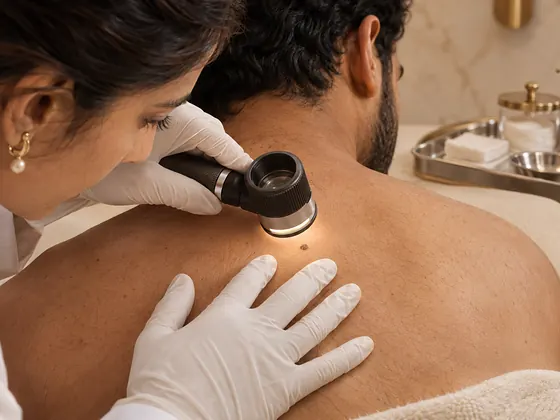
The doctor examines the mark, asks how long you have had it and whether it has changed or bled, and decides whether it suits treatment at the clinic.
- Planning
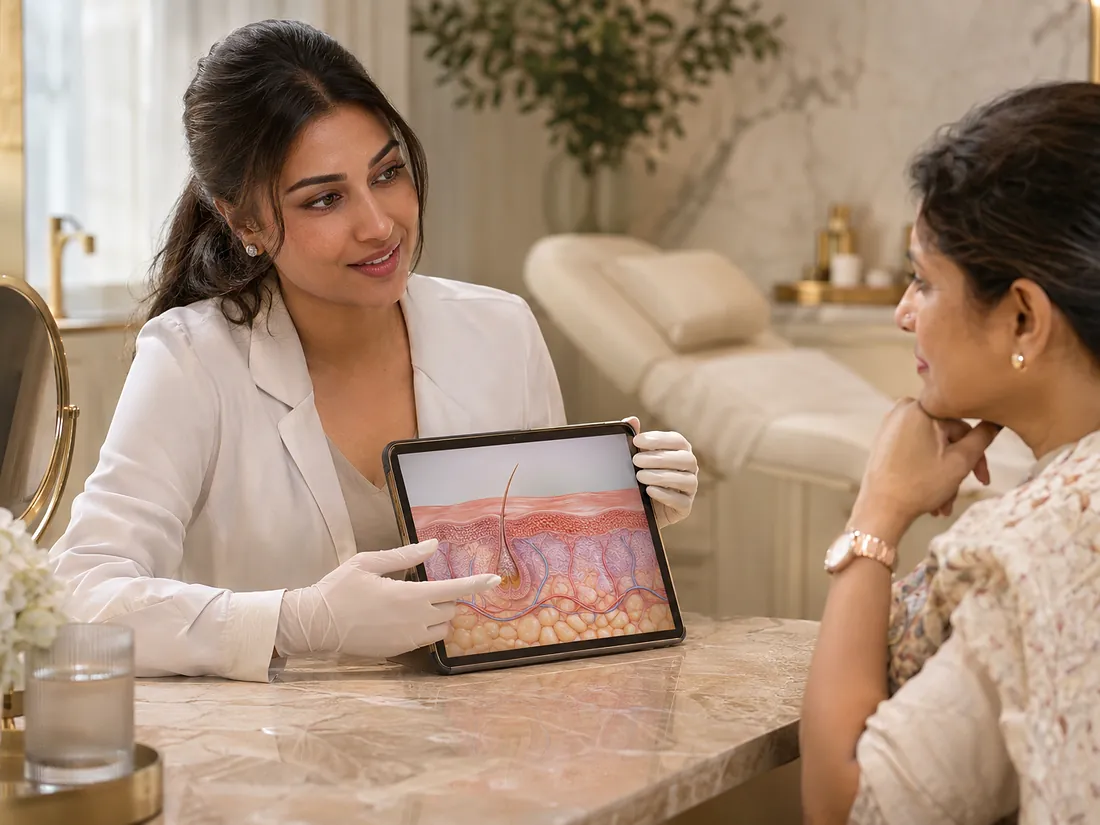
The doctor explains the method, the likely number of sessions and how the area will look while it heals.
- Treatment
The area is cleaned and numbed if needed, and the chosen treatment is done.
- Review
You return so the doctor can check healing and decide if more treatment is needed.
Aftercare
- Keep the area clean and dry
- Do not pick the scabs
- Use sunscreen on the healed area
- Report bleeding that does not stop with pressure
Is it right for you?
Babies, young children and anyone with a large, fast-growing or deep hemangioma should see a specialist, and you must tell the doctor first if you take blood thinners.
Questions about Hemangioma
Is a hemangioma cancer?
No. Hemangiomas and cherry angiomas are benign. Any spot that changes quickly, bleeds often or looks unusual should still be checked.
Will the spot come back?
A treated spot does not usually return, but new cherry angiomas can appear with age. Results vary.
My child has a hemangioma. Can you treat it?
Many infant hemangiomas shrink on their own, but some need early medical care. Please see a paediatrician or paediatric dermatologist, as the clinic sees patients aged 14 and above.
Does treatment hurt?
Most people feel a brief sting or heat. Numbing cream or local anaesthesia is used when needed.