
A skin cyst is a closed sac under the skin filled with keratin or oily material, such as an epidermoid or sebaceous cyst. Removal helps if a cyst keeps getting inflamed, is growing, or bothers you.
How it works
Under local anaesthesia, the doctor makes a small cut and removes the cyst along with its wall, which lowers the chance of it coming back. The wound is closed with stitches. Removed tissue may be sent to a lab for testing when the doctor thinks it is needed.
What it can help
- Lumps under the skin
- Cysts that keep swelling
- Cysts on face or scalp
- Smelly discharge from a cyst
Your visit, step by step
- Consultation and examination
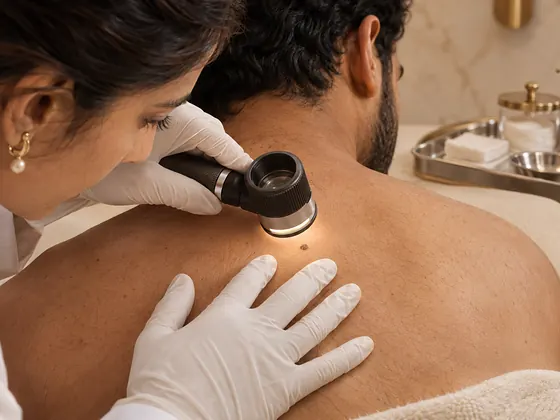
The doctor examines the lump to confirm it is a cyst and not another kind of growth, confirms surgery suits you, and may advise an ultrasound.
- Settling inflammation first
If the cyst is red and painful, it may be treated with medicines first, as removal is easier once it settles.
- Removal under local anaesthesia
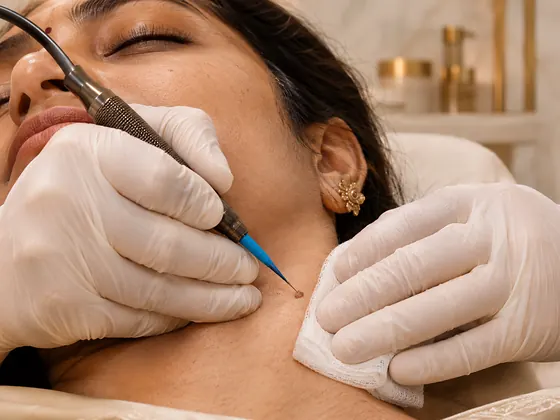
The area is numbed, the cyst is removed, and the wound is stitched and dressed.
- Stitch removal and results
Stitches come out in about 7 to 14 days, and the doctor explains any lab report.
Aftercare
- Keep the dressing dry for 48 hours
- Take medicines exactly as prescribed
- Avoid heavy exercise until stitches are out
- Report redness, pus, fever or bleeding
Is it right for you?
Tell the doctor first if you take blood thinners, or have diabetes, a bleeding disorder or a history of keloids, as these affect healing.
Questions about Cyst Removal
Can I just get the cyst drained?
Draining can ease a painful, infected cyst, but the sac stays behind, so it often comes back. Full removal is done once the area has calmed.
Will there be a scar?
Yes, a small line scar is expected. It usually fades over months, though results vary.
Can a removed cyst come back?
If the whole wall is removed, it is less likely to return, but it can still happen.
Do I need someone to come with me?
Usually not, as only local anaesthesia is used. You can go home soon after the procedure.