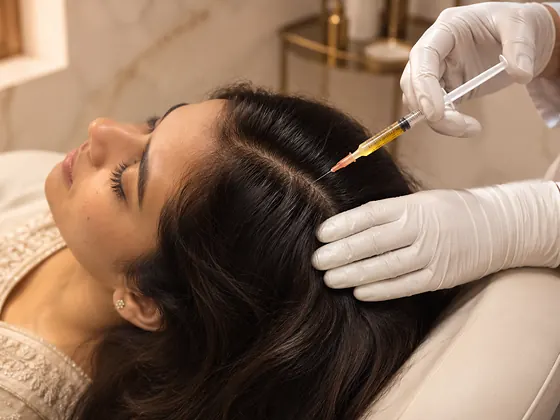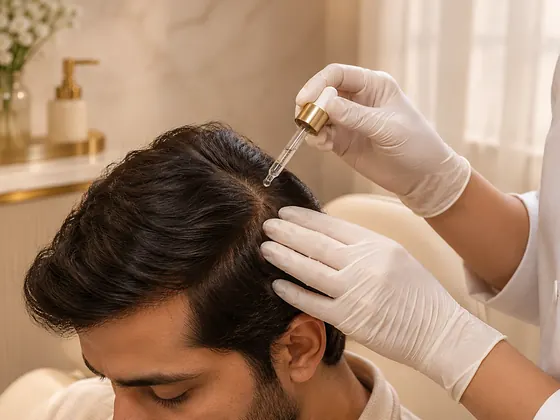
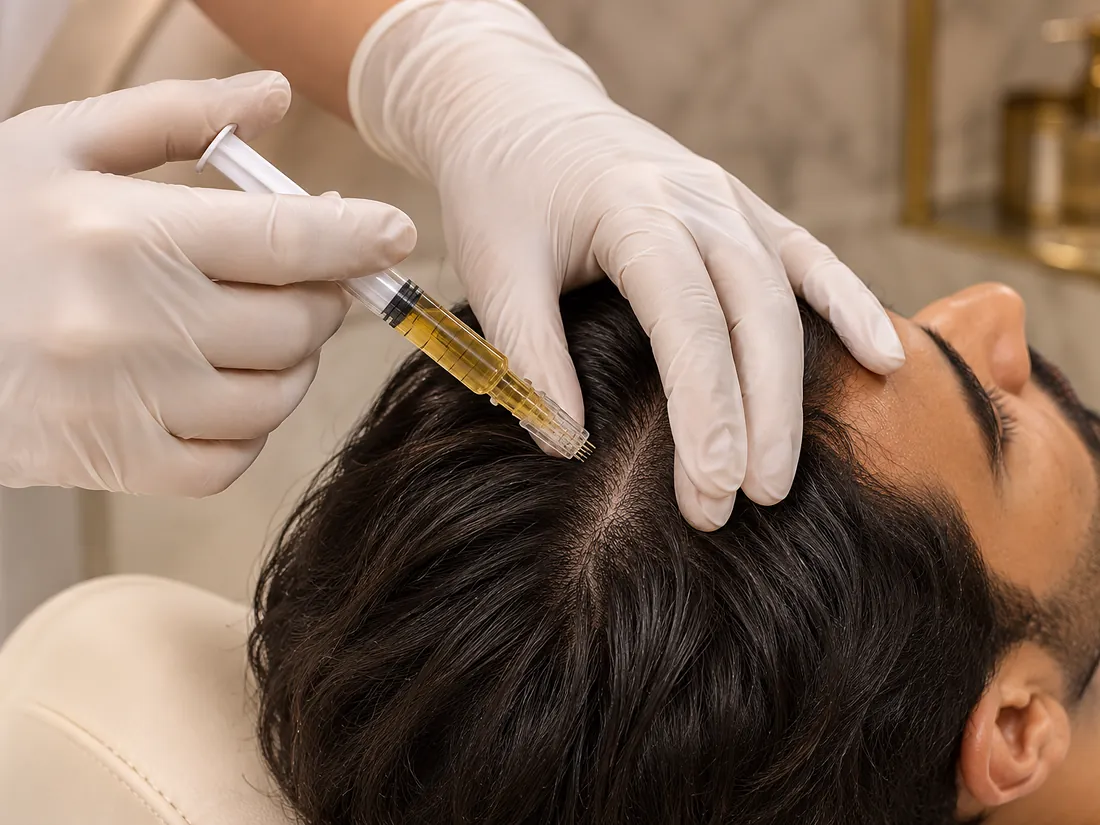
Hair mesotherapy places small amounts of vitamins, amino acids and sometimes medicines directly into the scalp. It may help men and women with thinning or hair fall when used as part of a wider plan.
How it works
The doctor uses a very fine needle to place tiny amounts of a solution just under the skin of your scalp. The aim is to bring nutrients close to the hair roots. Research on hair mesotherapy is limited and results are mixed, so the doctor will discuss whether it is likely to help you.
What it can help
- Hair thinning
- Ongoing hair fall
- Dull, weak hair
- Thinning after stress
Your visit, step by step
- Consultation with the doctor
The doctor examines your scalp, asks about your health, medicines and allergies, and explains what the solution contains.
- Preparing the scalp
Your scalp is cleaned and a numbing cream may be applied to make the injections more comfortable.
- Micro-injections
The doctor gives many small, shallow injections across the thinning areas.
- Aftercare and next visit
You get aftercare advice and a date for your next session.
Aftercare
- Do not wash your hair for the rest of the day
- Avoid hair colour, oiling and styling products for 2 to 3 days
- Skip the gym, swimming and steam for 24 hours
- Do not scratch or rub the treated areas
Is it right for you?
Tell the doctor first if you are pregnant or breastfeeding, have a bleeding disorder, take blood thinners, have a scalp infection or are allergic to any ingredient in the solution.
Questions about Hair Meso Therapy
What is in the injection?
Usually a mix of vitamins such as biotin, amino acids and other nutrients, and sometimes a medicine. The doctor explains the exact mix before treatment.
Is it the same as PRP?
No. PRP uses your own blood, while mesotherapy uses a prepared solution. The doctor may suggest one, both or neither, depending on your scalp.
Does it hurt?
You will feel quick pricks. Numbing cream helps, and the needle used is very fine.
How soon will I see a change?
If it helps you, less hair fall may show after a few sessions. Evidence is limited and results vary, so it is often combined with other treatment.